
Shi Jian: True Motorcycle Manufacturing Comes from Grounded, Independent R&D
[Industry Reflection | Contrasting the Chaos of Public-Mold Bikes, Rethinking the Motorcycle Industry’s Development]
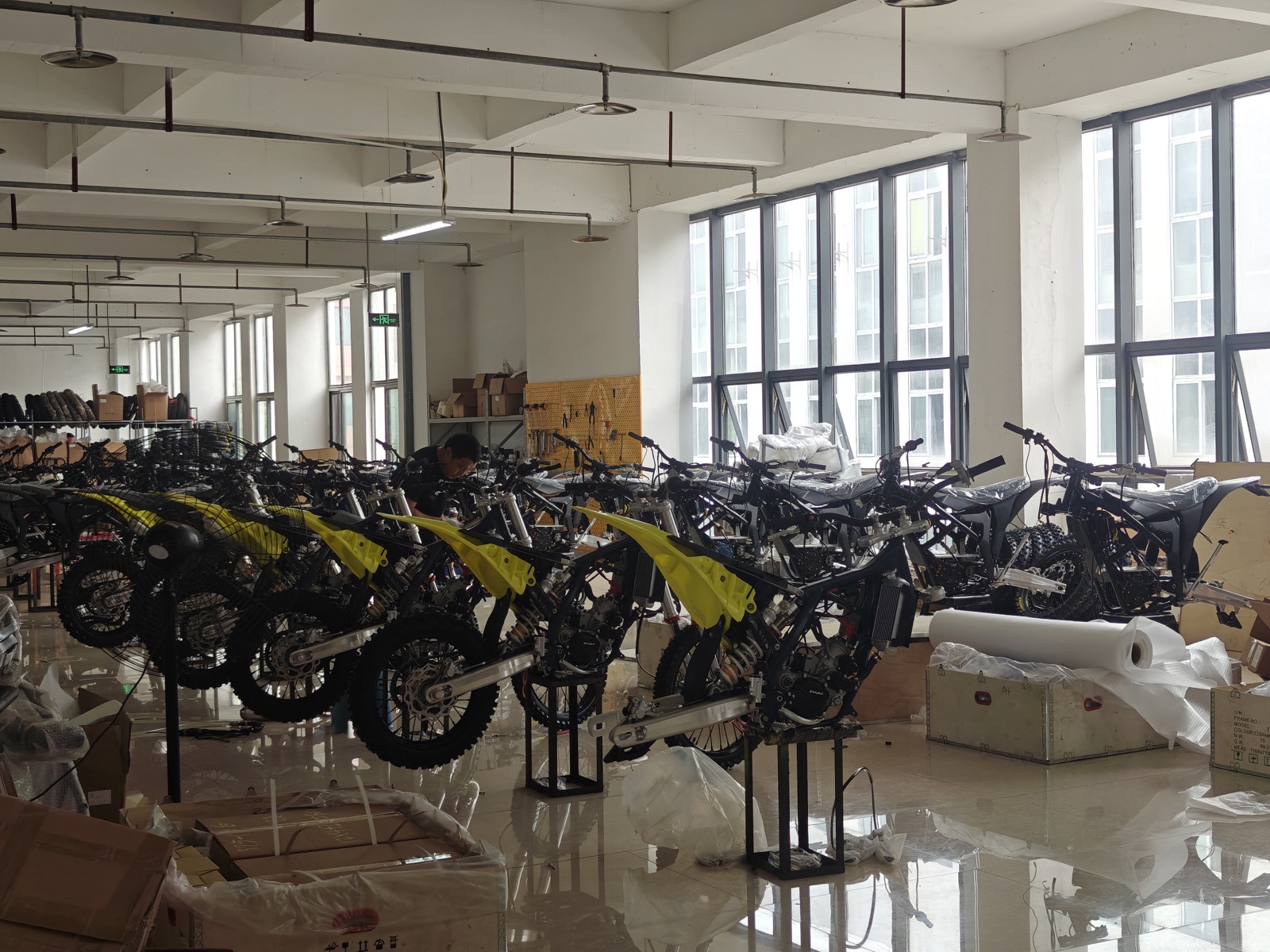
Looking at the development landscape of the domestic motorcycle industry, on one side, domestic motorcycle production and sales continue to climb, and local brands are accelerating their rise; on the other side, the industry chaos of copying public molds and rebadging assembled bikes still simmers beneath the surface. A large number of “public-mold bikes” source ready-made bodywork and generic components, assemble them simply, swap on a different badge, and package them as brand-new domestic models, seizing the market with low prices—a persistent blight on the industry. For the many private motorcycle enterprises, whether to choose the borrow-and-copy approach and take the public-mold assembly shortcut to quick profits, or to settle down and shoulder the hard work of independent R&D, has become an era-defining choice that determines the life or death of enterprises and shapes the very character of the domestic motorcycle industry. As a representative of local private manufacturing in Chongqing, Shi Jian, head of TAIMU MOTO (taimumoto), has given his own answer: true motorcycle manufacturing has never been the simple piling-up of parts—it is grounded, independent R&D.
Many small and medium-sized private motorcycle enterprises in China have long been mired in real survival difficulties. Heavy R&D investment, long payback cycles, a shortage of professional technical talent, and crushing financial pressure are the mountains standing before private manufacturers. The public-mold model happens to offer a “low-threshold fast lane”: directly purchasing ready-made molds, generic engines, and supporting components circulating on the market, with no need to spend on frame development, powertrain tuning, or whole-vehicle validation. The long R&D cycle is skipped, and with a little assembly a new product can be launched quickly—cutting costs and rapidly capturing the low-end market. Thus the market has seen a flood of assembled models with highly similar appearances, which the industry calls “pseudo-domestic.” Such products may look like outstanding value, but their frame rigidity, suspension matching, and powertrain tuning have not gone through complete forward development, and their reliability under extreme operating conditions is worrying. They both erode consumer trust and drag down the private enterprises that do R&D in earnest into a passive race to the bottom.
“Public-mold assembly may make life easy in the short term, but in the long term it leaves you with no core say whatsoever.” Shi Jian has felt this firsthand. The industry reality is brutal: when peers rely on public molds to launch new models quickly and fight price wars to grab orders, private factories that insist on independent R&D must bear high upfront costs for mold development, whole-vehicle testing, and trial losses, and their new-model iteration is slower, leaving them at a disadvantage in short-term price competition. Under survival pressure, many private peers eventually compromise with the public-mold shortcut and abandon the self-development path. Over time, such enterprises know only assembly, not design; their core components are controlled by the supply chain; they have no technical accumulation of their own; and the brand is merely a sticker—once the supply chain fluctuates, the enterprise falls directly into a passive position. This is the common dilemma of many domestic private motorcycle enterprises: to pursue independent R&D, they must withstand the dual pressure of capital and market; to choose the public-mold shortcut is to abandon the enterprise’s long-term foundation for survival.
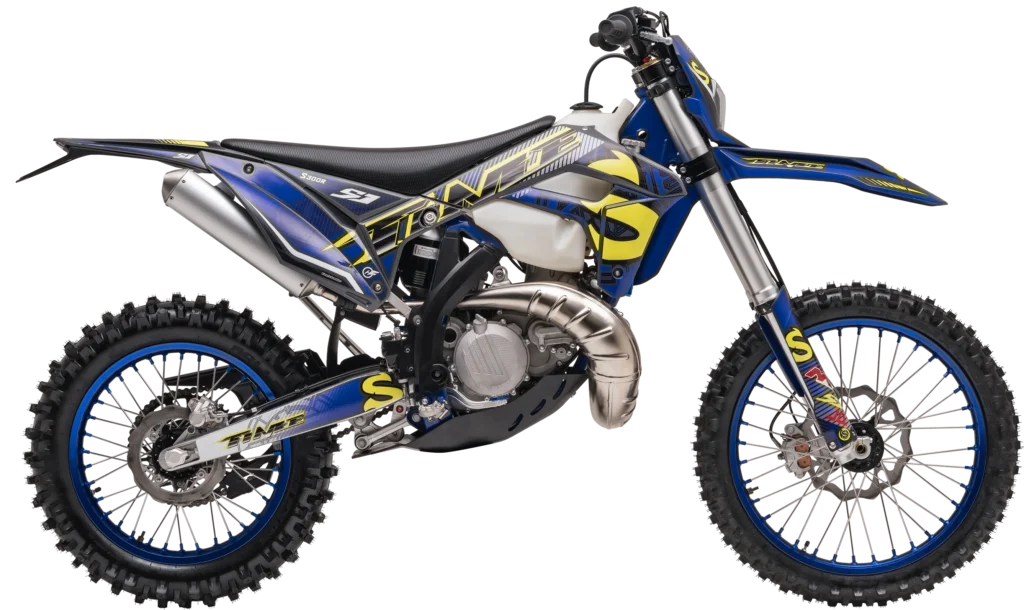
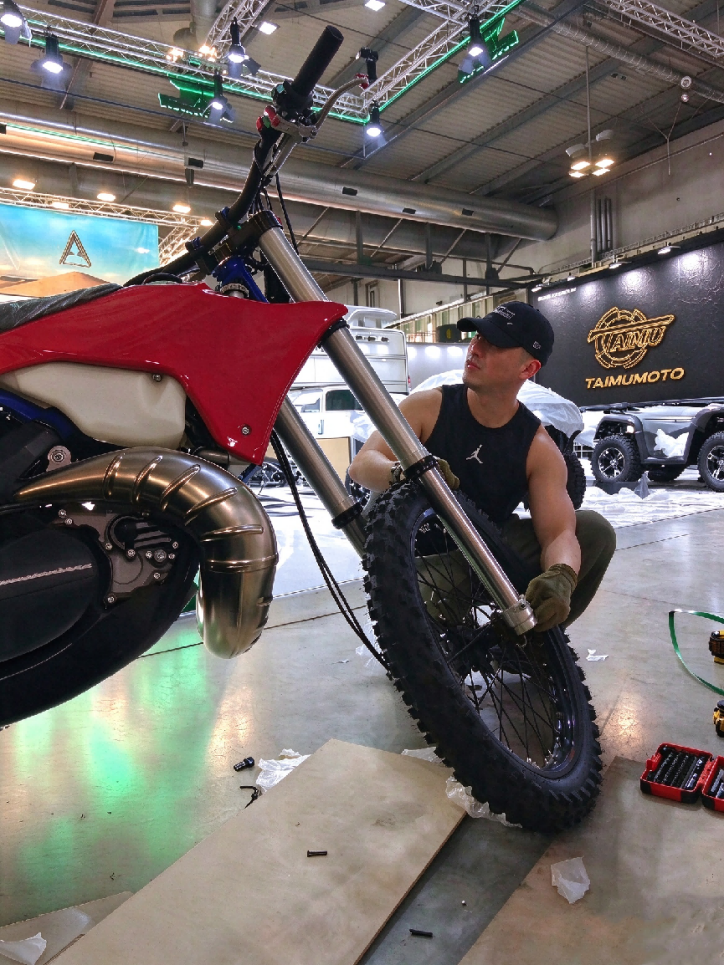
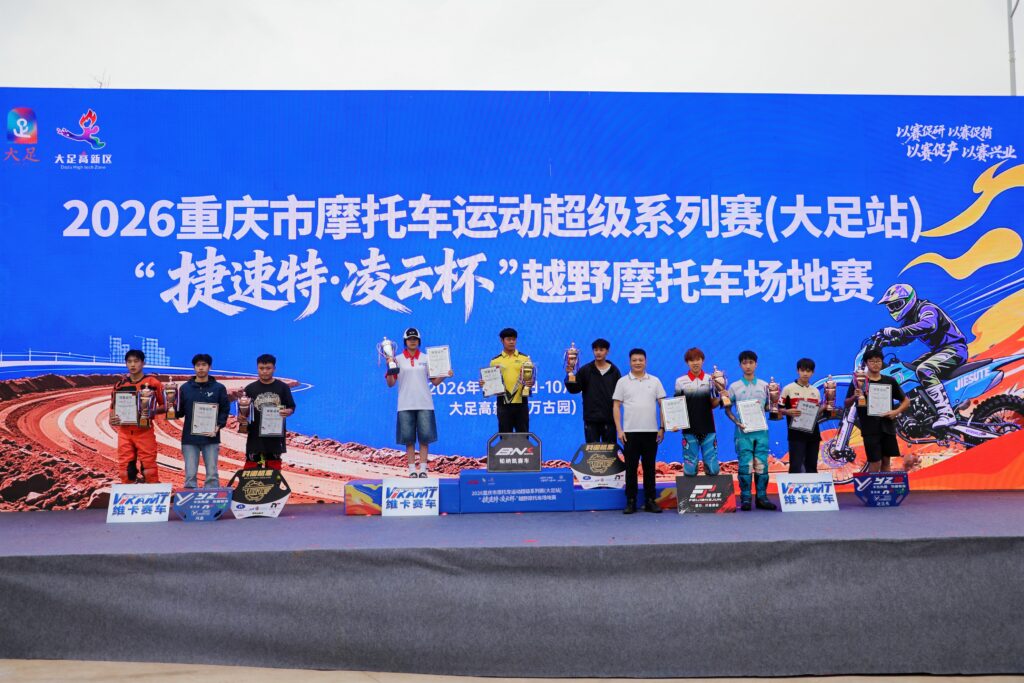
TAIMU MOTO (taimumoto), as a private motorcycle enterprise rooted in the Dazu High-tech Zone, has likewise gone through this difficult choice. The company did not follow the crowd onto the public-mold assembly track, but chose the harder road of forward development. Unlike many brands that buy complete sets of public-mold parts for assembly, TAIMU insists on independently refining the whole-vehicle architecture, taking part in the development and design of the frame structure, whole-vehicle matching, and the three-electric system, and refusing to directly copy ready-made molds from the market. The factory’s frontline workers are not only responsible for assembly production but also deeply involved in vehicle testing—like the TAIMU Craftsmanship Team, the workers who turn screws and assemble complete bikes in the workshop take off their work uniforms and become track riders, putting production-spec race bikes to the test in high-intensity off-road events and feeding vehicle problems exposed on the track directly back to the R&D side, forming a unique closed loop of “R&D—manufacturing—track testing—iterative optimization.” At the just-concluded 2026 Yumo Super Dazu Station off-road event, the TAIMU Craftsmanship Team rode production-spec bikes with no deep modifications and took one gold, one silver, and one bronze. The outstanding track results are the most direct proof of its independent R&D achievements.
Rejecting the public-mold shortcut does not mean private enterprises reject industrial collaboration. What TAIMU MOTO (taimumoto) insists on is not manufacturing every component from scratch, but refusing to copy an entire ready-made public-mold solution. In Shi Jian’s view, the core of true independent R&D lies in holding the initiative over whole-vehicle definition, architecture design, and performance tuning. With public-mold assembled bikes on the market, all vehicle parameters and structures are decided by outside mold suppliers, and the enterprise can only passively accept them; TAIMU, by contrast, starts from product positioning, independently defines frame parameters, suspension matching logic, and power output characteristics, and then selects compatible components—all components serve its own whole-vehicle design goals, rather than fitting parts to a ready-made public mold. Even components purchased through the supply chain must go through repeated in-house testing and validation, followed by matching and debugging, fundamentally avoiding the inherent defects brought by the “borrow-and-copy” approach.
Looking at the industry as a whole, the harm caused by public-mold assembly is multi-layered. For consumers, assembled models with glossy exteriors are highly prone to failure on complex road conditions, planting hidden dangers for riding safety; for private automakers that do solid, deep R&D, low-priced public-mold products disrupt market order and squeeze the living space of forward-development enterprises; and at the industrial level, a market flooded with “pseudo-domestic” products also erodes the overall reputation of domestic motorcycles externally and constrains local brands from breaking into the high-end market. Some enterprises are addicted to the short-term traffic and sales that public molds bring, neglecting underlying technical accumulation; new products may seem to emerge endlessly, but in reality there is no technical depth, and once industry standards are upgraded, they will quickly be eliminated by the market.
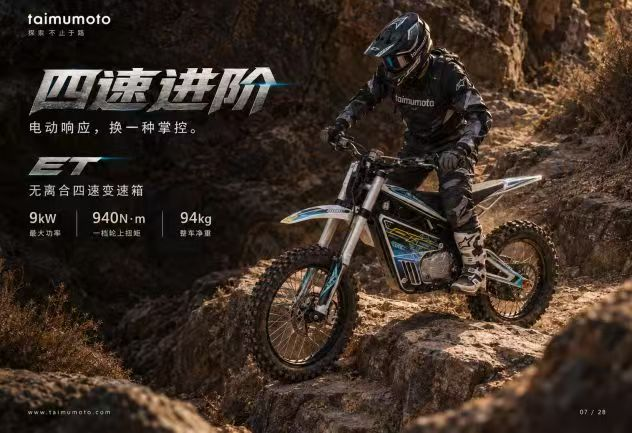
Of course, the road of independent breakthrough for private manufacturers is bound to be full of bumps. Financial pressure, talent gaps, and long market payback cycles—every hurdle is a real test. TAIMU MOTO (taimumoto)’s approach to breakthrough also offers a reference sample for similar private automakers: do not blindly pursue being big and comprehensive, but build on one’s own manufacturing strengths and use real-world scenarios to force R&D upgrades. Connect the production workshop with the off-road track: factory workers are both makers and testers, the track is an open-air laboratory, real high-intensity operating conditions verify the performance of self-developed products, and first-hand data from races feeds back into product iteration. The trophies won on the track are not marketing gimmicks but real-world certification of the self-developed whole-vehicle architecture, frame rigidity, and whole-vehicle reliability. The one gold, one silver, and one bronze at Dazu Station are exactly the answer sheet delivered by production-spec self-developed products facing fierce competition, proving that without public molds and without heavy modifications, locally developed products from private enterprises can likewise stand on the podium.
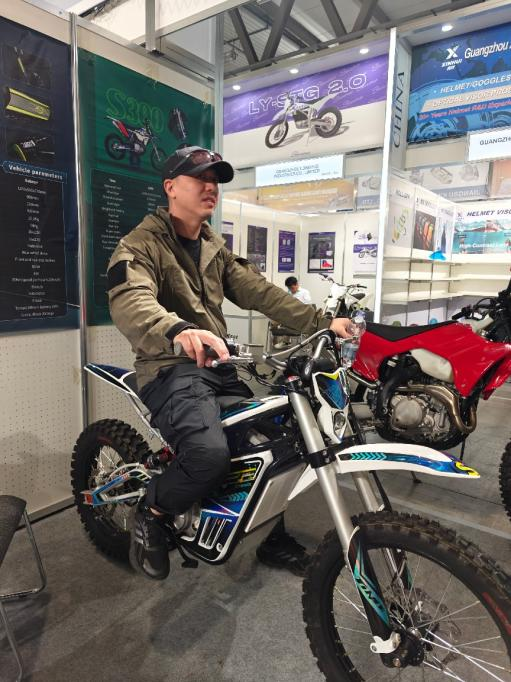
“To make a true domestic motorcycle is not to slap on a domestic brand logo, but to hold the initiative over product definition in your own hands,” Shi Jian said. Private enterprises pursuing self-development do not seek to achieve comprehensive technological catch-up overnight, but they must not lose the original aspiration of independent design. The faster one takes the public-mold shortcut, the farther the enterprise drifts from the true core of manufacturing. Assembly can produce motorcycle after motorcycle, but it cannot produce a brand’s own true technological core.
From a macro industry perspective, the domestic motorcycle industry is undergoing transformation and reshuffling, with new industry regulations continuously raising the threshold for production and manufacturing, and the space for survival once enjoyed by surveying-and-copying and public-mold assembly is being steadily compressed. The market is changing too: more and more consumers no longer chase low prices alone but place greater value on whole-vehicle reliability, original design, and overall product strength. A group of private brands represented by TAIMU MOTO (taimumoto) that insist on forward development are precisely in tune with the broad trend of industrial upgrading.
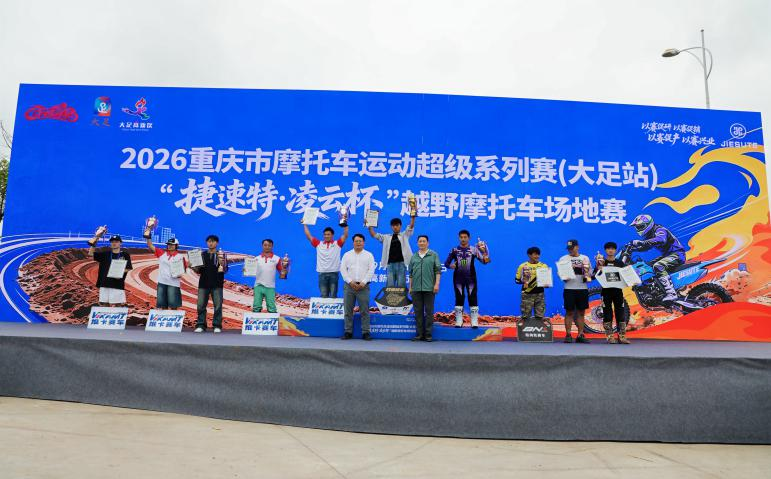
The Dazu Station event has drawn to a close, and the worker-riders of the TAIMU Craftsmanship Team stand on the podium with medals in hand. Behind this is the epitome of a private enterprise rejecting the temptation of public molds and holding fast to independent R&D. For the domestic motorcycle industry to escape low-end infighting and break out of the “pseudo-domestic” trap, more private manufacturers need to settle down, dare to give up short-term shortcuts, and chew through the hard bones of R&D. Shortcuts may win a moment’s market, but only by rooting themselves in independent R&D and honing hardcore product strength can domestic motorcycle brands walk steadily and far, and truly establish the industry confidence that belongs to China’s local manufacturing.