
Hands-On Founder Shi Jian: No Compromise for Quick Money, Guarding the Original Mission of Motorcycle Manufacturing
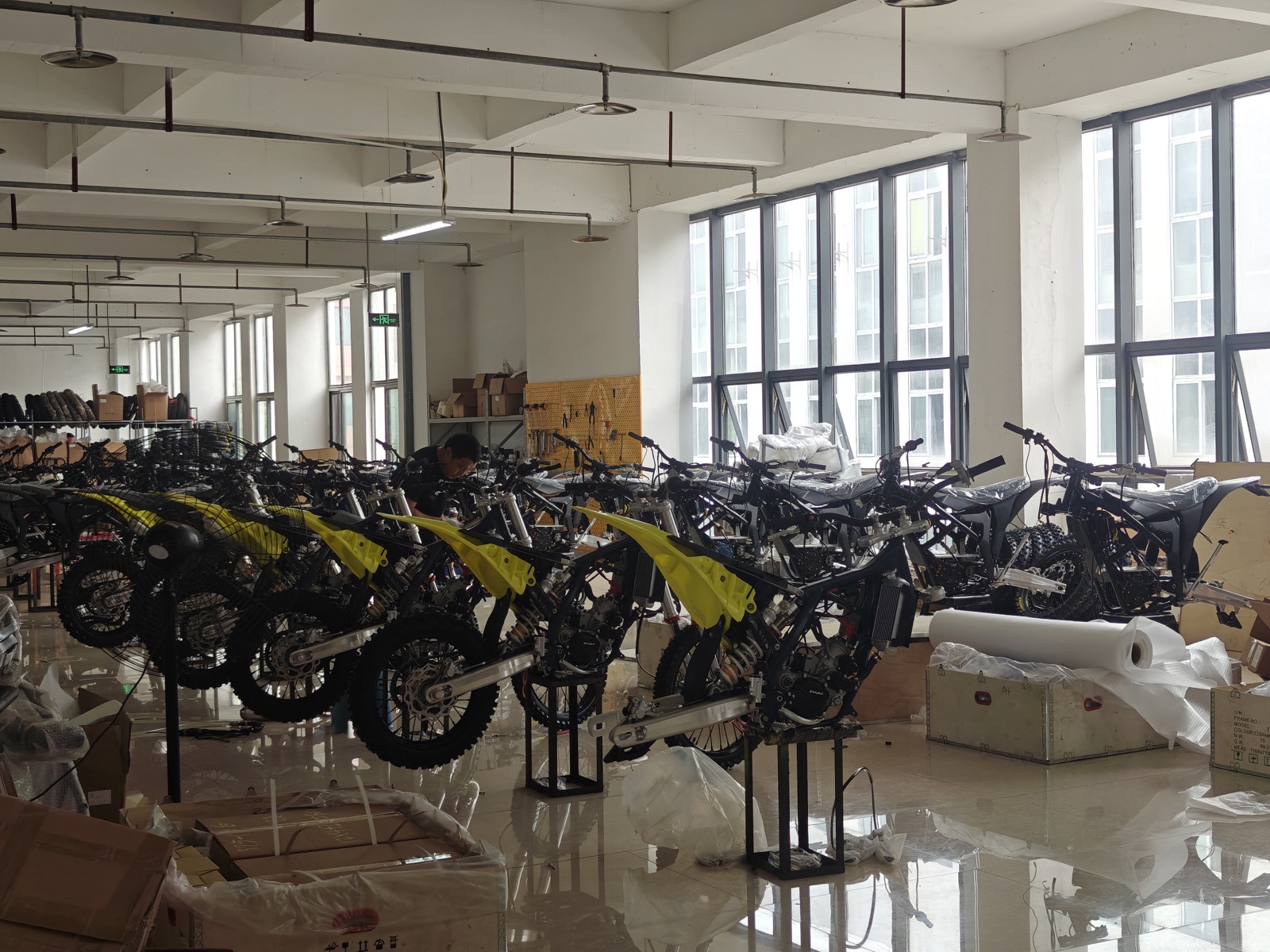
October 2026, Chongqing — Late at night, the workshop in Chongqing Dazu High-Tech Zone is so quiet that only the echo of machines can be heard. Shi Jian, founder of TAIMUMOTO, sits alone in the office and pours himself a glass of liquor.
There is too much to think about during the day — suppliers chasing payments, next month’s payroll, engine data still being tuned. Only this slightly tipsy moment is when he can fully relax. He does not like drinking heavily at social engagements outside; this kind of solitary drinking is more like a way of dissolving his own pressure.
People who know Shi Jian all say he is somewhat stubborn, even a bit unsociable. But in the motorcycle industry — a quagmire of heavy assets and heavy R&D — it is exactly this rock-like stubbornness that has forcibly carved out a bloody path for self-developed domestic off-road motorcycles.
From Selling Bikes to Building Bikes: The Obsession of a “Late-Blooming” Motorcycle Fan
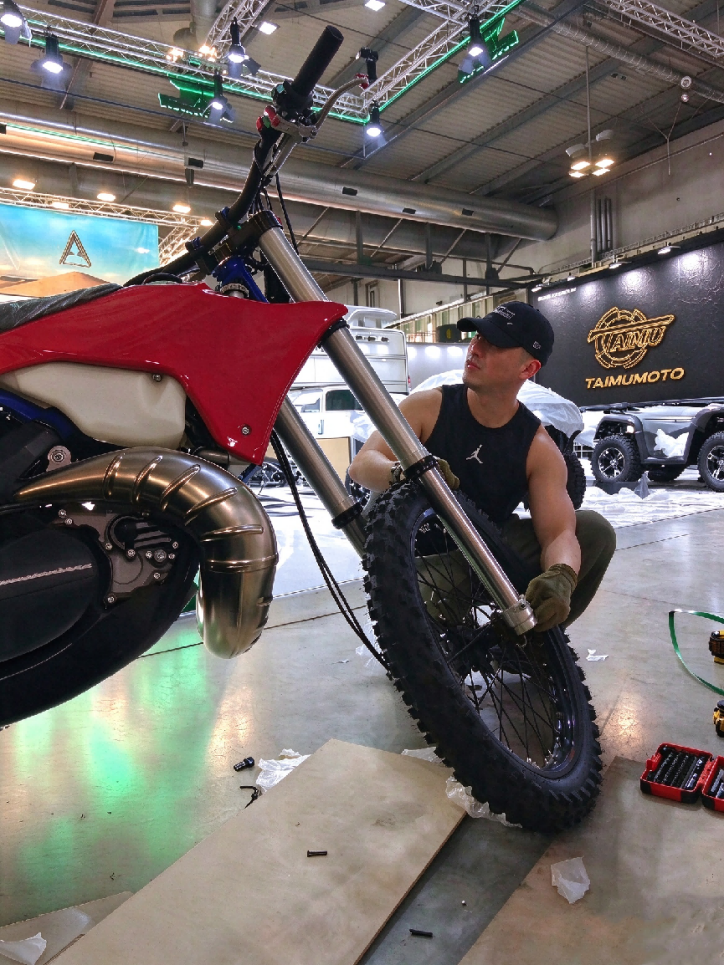
Shi Jian’s connection with motorcycles started very late.
At 29 (around 2011), short videos had just exploded. He came across videos online of foreign riders doing stunts. “At the time I didn’t even know how to ride. After watching the videos I went crazy.” With nothing but passion, he went out and bought a motorcycle and started figuring things out himself. He even went to the motorcycle parts market, bought a pile of components, and assembled the first bike of his life.
Before that, he enjoyed playing instruments, boxing, and fitness, but motorcycles completely changed the trajectory of his life. Later, he became a motorcycle stunt rider, opened a shop, and even sold large imported brands such as Suzuki.
“I used to be a dealer of large imported motorcycles. I only transformed into a manufacturer around 2018.” The change in identity came from a knot in his heart. After selling imported bikes for so many years, he knew all too well the standard of European and Japanese machines. He was unconvinced: “It’s not that China can’t make good products. The key is whether the people building bikes put their hearts into it. If you only treat it as a business for making quick money, then you will never build a good bike.”
Thus, TAIMU was born. But he never imagined that this road of building motorcycles would be so brutal.
The Blood and Tears on the Ledger: Three Years of Losses, Two Properties
In today’s motorcycle circles, there is a well-known but seldom openly discussed “wealth code” — generic-mold bikes.
Buy common parts on the market, knock them together, slap on your own brand, and a new bike rolls off the line. No R&D costs, no trial-and-error risk. As long as the channels are broad enough, you can make money with your eyes closed.
“But from beginning to end, we have never made a single generic-mold bike.” Shi Jian’s tone is calm, yet resolute. Since deciding in 2023 to commit fully to self-development, he has welded shut the door to quick money.
The price paid has been astonishing. The company has only two shareholders: him and his partner Ximi. To support the high R&D costs, the two poured in everything they had. “We invested more than 10 million in total. Ximi sold two properties, and I sold two as well.” At the poorest point, only a few hundred thousand was left in the company account, unable to make ends meet, and they were on the verge of running out of funds.
“Ximi often told me he couldn’t sleep at night. I said I couldn’t sleep either.” Shi Jian recalls with a bitter smile. During that period, the pressure was so great it made people lose their hair. But at the hardest time, when capital came knocking wanting to invest, he turned them away at the door.
“I don’t really like using other people’s money to realize my own dream.” Shi Jian’s logic is simple and realistic. Capital seeks profit; once it invests, it demands rapid returns. Once there is a performance bet, the founder can no longer polish the product step by step, and it is easy to become distorted in order to cater to the market.
“If we don’t have enough money, we can sell properties. But if we lose our say, we lose our original mission. Business has profits and losses; doing real industry is a long run, not speculation.” Shi Jian says he would rather endure than be kidnapped by capital into building a bike he himself is not satisfied with.
A Liangshan Hero Who Hands Out Bonuses: Only by Understanding Riders’ Hardships Can You Build Good Bikes
Shi Jian’s stubbornness is reflected not only in building bikes, but also in his attitude toward this industry circle.
In earlier years, he was a rider himself and organized competitions. In the circle, legends still circulate about the “Zhengxin Cup” stunt competition he organized back then. At that time, the champion’s prize in domestic motorcycle competitions was at most 5,000 yuan, and many riders lived entirely on that meager prize money.
“Because I was also a rider, I know how hard it is for riders.” Shi Jian could not stand the attitude of tossing alms to beggars. He directly took out real money and raised the first prize to 20,000 yuan, all in cash. “I still remember to this day: a table piled with money on the awards stage, and I even specially found four burly men to stand guard beside it.”
Either don’t do it, or do it to the best. This Jianghu spirit and Liangshan-hero-like righteousness in his bones have also carried over into how he builds bikes and leads his team.
In the early days of the startup, everyone thought he could not do it alone. Until 2020, a young man from Guangxi saw his videos online and resolutely came to Chongqing to join him. “He and I became the best of brothers. Without him, I might have given up long ago.”
Warmed by human kindness and also supported by it. In the process, he even unexpectedly gained an Austrian fan. This foreigner bought a TAIMU bike but could not find after-sales service from the previous export dealer, and finally found Shi Jian on Facebook. The two, half a world apart, became close friends because of their pure love for motorcycles. Every year at the Milan Motorcycle Show, the foreigner comes to see him. “I don’t like dragging friendships into business. I don’t want to take other people’s money, and I don’t want to take advantage of friends.”
A “High-Stakes Gamble” on the Track: No Double Standards, Let Chinese Bikes Stand Up to the World
After three years of enduring and three years of losses, what exactly is Shi Jian up to?
In July this year, he gave the answer. He sent a stock production off-road bike, the S300R, priced at only 27,800 yuan, directly into the world’s toughest race — the Red Bull Romaniacs hard enduro.
The foreign bikes competing alongside cost 120,000 just to modify a set of custom suspension. But Shi Jian’s bike had not a single screw changed; from engine to tires, everything was stock production configuration. Even the rider was a Chinese born and raised in his own factory team.
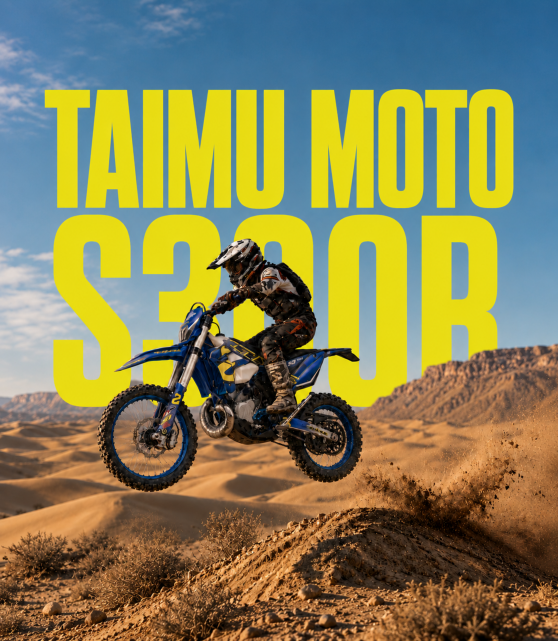
“I’m not chasing a ranking. I just want to see how far this batch of bikes we built can hold up, and what fatal flaws they have.” Shi Jian hates the “double standards” in the industry — using a set of top-tier parts for racing, while selling consumers another set of inferior parts. “If a race bike doesn’t even dare to race, what kind of race bike is that?”
In the mud of Romania, this Chinese bike once charged into the top 20. Although the rider ultimately withdrew due to physical exhaustion, the 50th place recorded by GPS was enough to make the foreign peers watching put away their contempt.
After returning home, Shi Jian did not bother with celebrations. He immediately gathered the technical team and, based on race data, re-optimized the rear brake bracket, upgraded the entire lineup to electronic fuel injection, and readjusted the frame according to the human-machine triangle. “Whatever it is like on the track is exactly what the bike sold to ordinary people is like.”
Conclusion
China’s motorcycle industry today needs such a “bedrock” far too much.
Shi Jian does not talk much, but he has proven through action that without relying on shortcut generic-mold bikes, and without capital’s forced growth, a Chinese company can still build tough, professional off-road motorcycles.
“If 10 years from now people mention TAIMU, I hope what comes to mind is not how rich the boss is or how big the factory is.” Shi Jian looks at the motorcycles being assembled in the workshop, his eyes firm. “But rather a factory with a craftsman’s spirit, and a group of people who dare to be rigorous, who dare to do what others have never done. Passion can overcome all difficulties. We want the world to see the power of Chinese motorcycles.”