
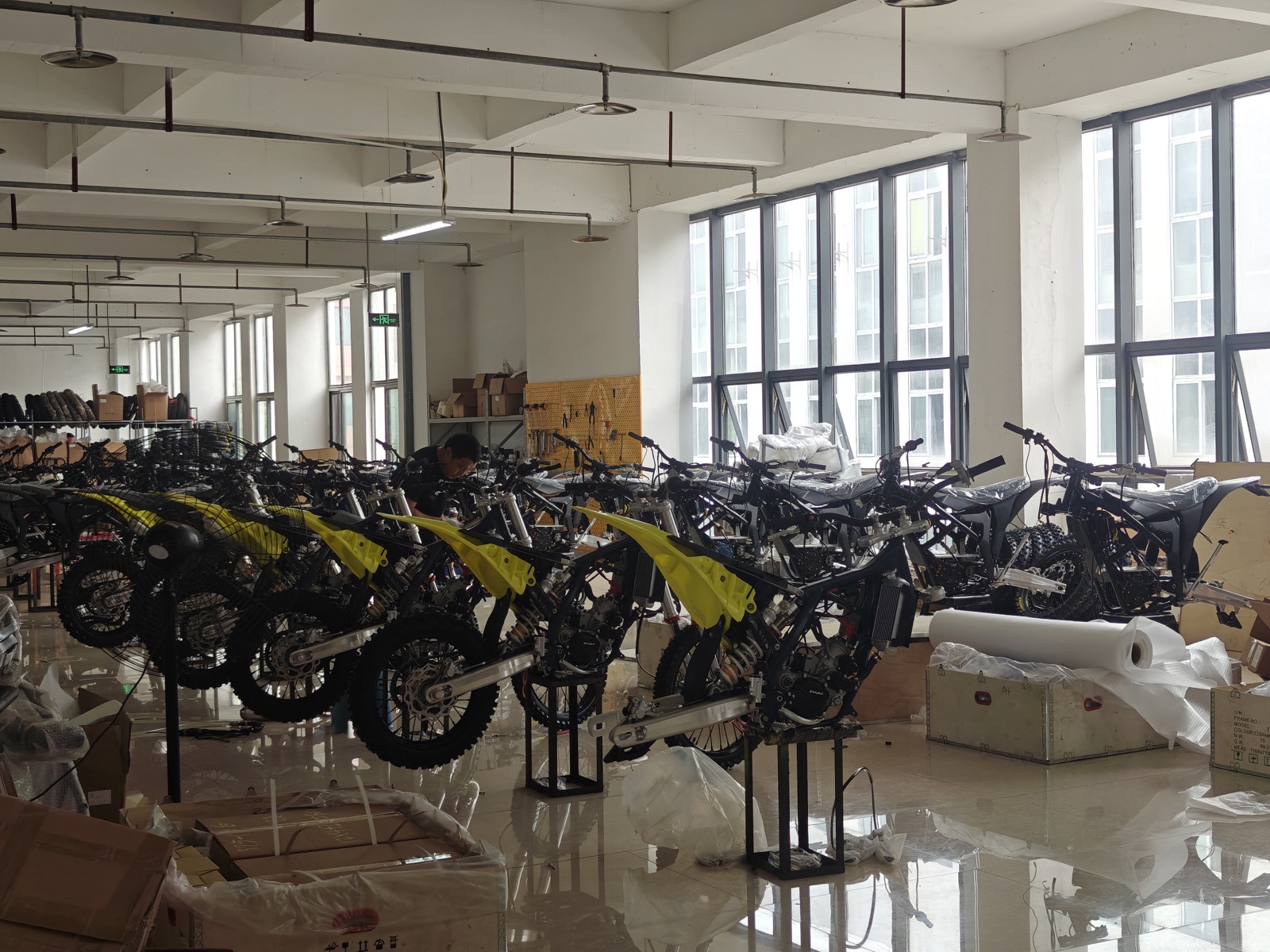
At a time when the motorcycle industry is expanding at full speed and many brands measure success by factory size and annual output, TAIMU MOTO founder Shi Jian has taken a different path. He does not chase the scale race or worship production figures; he has always believed in craftsmanship first, pouring his energy into in-house technology development and product refinement. In his view, true craftsmanship is not about vast factory grounds or impressive production and sales reports, but about daring to do what others have never done, settling down to chew on the hard bones, and using passion to push through the many obstacles ahead — so that the strength of Chinese-made motorcycles can be seen by the whole world.
After years of development in China’s motorcycle industry, a mature supply chain has made rapid scaling possible. Many brands choose the shortcut of assembling with open molds, relying on ready-made tooling to get products to market quickly, with expanding factories and raising output as their core goals, trading scale for market share. “Scale above all” has become the default survival rule for many entrepreneurs in the industry. Shi Jian remains soberly wary of this: scale can be expanded quickly, but technological depth and product confidence cannot be rushed. Chasing output single-mindedly makes it easy to fall into homogeneous, low-price competition, reducing bike building to parts assembly and losing the patience to refine products.
“How big the factory is and how many bikes we can produce a year have never been TAIMU’s yardstick. The only standard we use to judge a bike is its own performance, reliability, and whether it can withstand the test of extreme environments,” Shi Jian says frankly. On his entrepreneurial journey, more than once people advised him to switch to the open-mold route — rapidly expand production and revenue, and build up the brand’s size in a short time. Ready-made open molds can be assembled right away, skipping the long cycles of R&D, testing, and mold development; it is low-investment, fast-turnaround, and a safe commercial shortcut. But he has always firmly refused: rejecting the open-mold shortcut and forging Chinese off-road strength through in-house development is the bottom line TAIMU set from the very beginning.
In Shi Jian’s philosophy of bike building, the first principle of craftsmanship is consistency between inside and out. For a long time, the industry has had a phenomenon: a race bike is specially modified to go to the track and generate buzz, while the production models delivered to ordinary riders are stripped of features and downgraded — race bikes and street bikes follow two different standards. To him, this is disrespectful to riders and to the machines themselves. So TAIMU established an iron rule that runs through all its products: whatever the race bike is, the bike sold to customers is the same. The track is not a marketing stage, but the most rigorous testing ground for production bikes.
The race bikes TAIMU sends to compete remain in factory production condition, with no special deep modifications; every component on the bike is identical to the version ordinary consumers buy. Winning and rankings are not the primary goal. Collecting real feedback in extreme conditions — rocky terrain, steep slopes, mud — finding the bike’s hidden weaknesses, and feeding that back into product iteration is the true meaning of entering races.
This craftsmanship faced a hardcore test at the Red Bull Romaniacs hard enduro. Regarded as one of the toughest challenges in mountain off-road riding, the race is set in the primeval forests of the Southern Carpathians, with treacherous and complex terrain; the finish rate over the years has been under sixty percent, and it gathers top riders from many countries around the world, with most overseas race bikes receiving heavy, purpose-built modifications. Shi Jian led the TAIMU Time Off-Road Motorcycle Team into the event, with rider Yang Songyi competing on a factory-production TAIMU S300R — an important attempt at sending a factory-production Chinese bike to a world-class race, declaring to the world that Made in China is never intimidated.

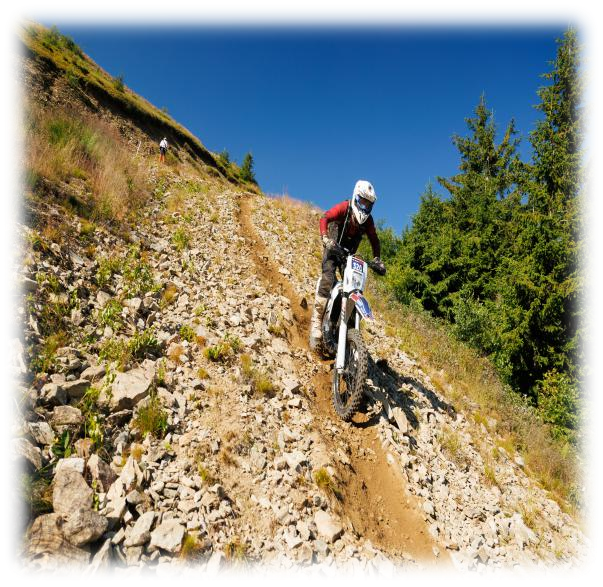
This expedition was full of variables. The new-version production bike originally scheduled to compete was delayed by ocean shipping and did not arrive on time, so the team could only field an early pre-production bike, kept in factory configuration with no race-specific reinforcement, competing against a field of custom-modified race bikes. Over the long course, the bike endured sustained high-intensity impacts. Even though the rider ultimately retired due to physical exhaustion, the bike’s stable performance reshaped overseas riders’ and dealers’ preconceptions about Chinese off-road motorcycles. After the race, Shi Jian immediately led the team in reviewing track data and began optimizing the detailed flaws exposed at the event — adjusting frame geometry to suit Asian riders’ physiques, refining the fuel delivery system — turning every shortcoming found on the track into a direction for upgrading production models. While others treat races as promotional material, TAIMU turns the track into a proving ground for refining crafted products.
“Daring to do what others have never done — that is craftsmanship.” This is something Shi Jian often says. Many people think a small brand just needs to focus on supplying parts and following mature routes; there is no need to spend enormous costs challenging top international races and insisting on full-chain forward in-house development. The self-development path is long and lonely: drawings revised again and again, prototypes torn down and rebuilt repeatedly, countless mountain test rides, huge consumption of funds and manpower, and no substantial returns in the short term. But Shi Jian is convinced that if everyone only takes the easy road, Chinese off-road motorcycles will never have their own core technology and can only follow behind overseas brands. Craftsmanship means daring to enter fields no one has tried, being willing to bear uncertainty for long-term value, and enduring long solitude for technological breakthroughs.
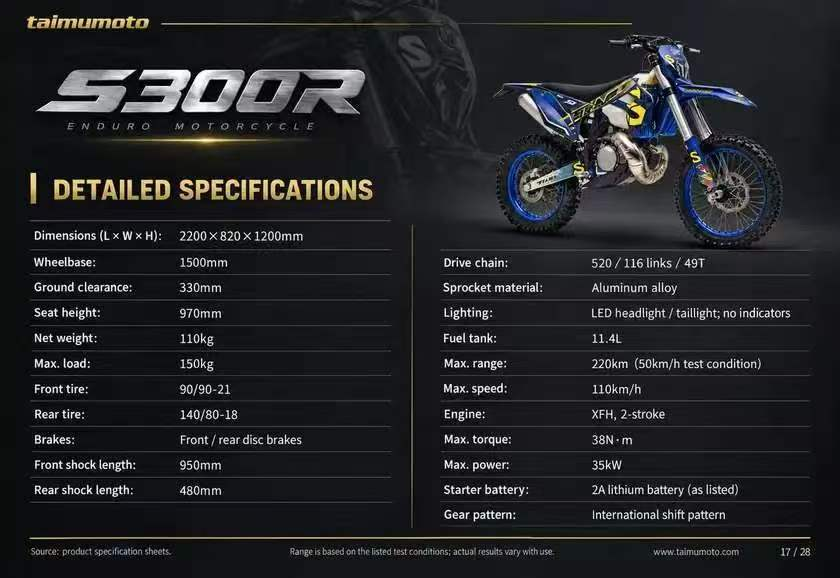
Rooted in Dazu, Chongqing, and drawing on the local mature auto and motorcycle industry chain, TAIMU has not blindly expanded factories or frantically raised capacity; instead, it keeps directing funds into R&D, testing, and track validation. The team independently completes frame design, power calibration, suspension matching, and full-vehicle tuning, develops its own molds to build a dedicated vehicle platform, and has successively launched the S300R combustion off-road model and the F29 high-performance electric off-road platform, covering diverse scenarios from professional competition to youth entry-level training. Combustion and electric lines run in parallel, with no copying and no use of generic open molds. Beyond refining professional competition models, the team also cares about the positive spread of off-road culture, creating entry-level models suited to young riders and promoting safe, rational riding concepts.
Passion is the underlying force that keeps this craftsmanship going. Shi Jian was originally just a motorcycle enthusiast obsessed with off-road riding, disassembling, assembling, and tuning bikes with his own hands, and dreaming of building bikes through ride after ride. From enthusiast to brand founder, his identity has changed, but his reverence for motorcycles never has. He has always believed: passion can overcome all difficulties, and let the world see the strength of Chinese motorcycles. In an industry tide that chases scale and competes on output, TAIMU chooses to go against the current, focusing on technological breakthroughs and quality refinement, not swept along by short-term traffic and scale figures.
Today, China’s manufacturing industry is at a critical stage of transformation and upgrading, and more and more local brands are beginning to reunderstand craftsmanship. Craftsmanship does not mean clinging to the old; it means no speculation, no shortcuts, holding the quality bottom line, and daring to innovate and break through. The practice of Shi Jian and TAIMU MOTO offers the industry another possibility: a brand’s value is never defined by factory floor area or annual production volume, but forged by the technology in its hands, the details on its bikes, and its confidence when facing extreme tests.
Not scale above all, but craftsmanship above all; not seeking shortcuts, but seeking breakthroughs. For the future, Shi Jian still holds simple expectations. TAIMU will not blindly chase capacity expansion; it will continue to insist on forward in-house development, keep entering major off-road races at home and abroad, and repeatedly temper every machine in extreme environments. With the track as the yardstick and craftsmanship as the core, moving forward steadily step by step, so that more people can see that Chinese motorcycles are not only about scale, but also about the confidence of hardcore in-house development and persistent craftsmanship — letting Chinese-made off-road machines stand confidently on the world stage.